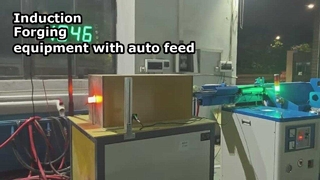
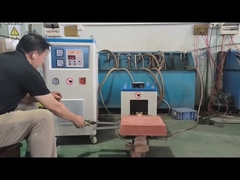
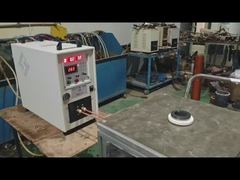
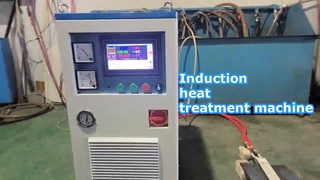
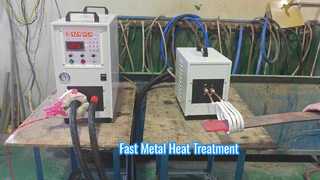
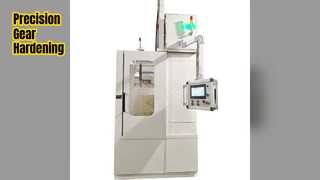
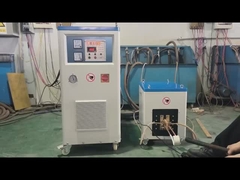
Brief: In this video, we take a focused look at the specifications and what they mean in practice for the high-efficiency Induction Forging Heat Furnace System. You'll see how this system processes steel, stainless steel, and carbon steel bars for hot forging applications, and learn about its energy-efficient operation, precise temperature control, and versatile industrial uses.
Related Product Features:
Achieves 90-95% energy conversion rate for significant cost savings and reduced power consumption.
Offers precise temperature control with uniform heating and adjustable frequency from 1 kHz to 20 kHz.
Provides zero emissions and minimal oxidation, supporting environmental sustainability.
Ensures enhanced product quality with reduced distortion and improved surface integrity.
Features operational safety with no open flames and built-in emergency shutdown protocols.
Delivers versatility for processing steel, copper, aluminum, and titanium across multiple industries.
Built for low maintenance with modular designs and extended furnace life using durable insulation.
Designed for space efficiency with a compact footprint and seamless integration into production lines.
FAQs:
What materials can this induction heat treatment furnace process?
The furnace is designed to process a variety of materials including steel, stainless steel, carbon steel, and copper bars, making it suitable for applications in automotive, aerospace, and renewable energy industries.
How energy-efficient is the induction forging heat furnace system?
The system achieves a 90-95% energy conversion rate, which is significantly higher than traditional gas or resistance furnaces, leading to reduced power consumption and lower operational costs.
What kind of temperature control and precision does the system offer?
It provides uniform heating with ±1°C temperature control through closed-loop systems and adjustable frequency from 1 kHz to 20 kHz, allowing precise control over heating penetration depth.
What safety features are included in the induction heating system?
Safety features include no open flames, a cooler work environment, and built-in emergency shutdown protocols such as overcurrent protection to prevent accidents.